Let's take a trip. To Yamanashi, the prefecture that harvests more grapes than anywhere else in Japan.
It's about two hours by bus from Shinjuku Station, so for anyone living in the Kanto area it's close enough to be easy.
January is the off-season, and there's a stillness over everything. Plenty of vineyards haven't had their winter pruning yet, and the vines look like they're taking a short rest after a year of working flat out — harvest, then fermentation, then all the labour that turns into good wine.
Grape vines grow with enormous vigour, so once the fruit is picked and the leaves have dropped, the unwanted canes have to be cut away in winter and the shape of the vine rebuilt.
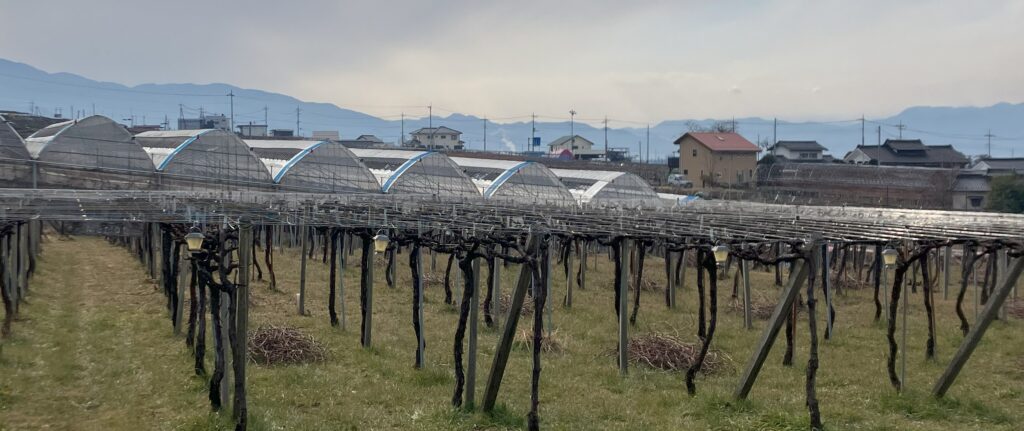
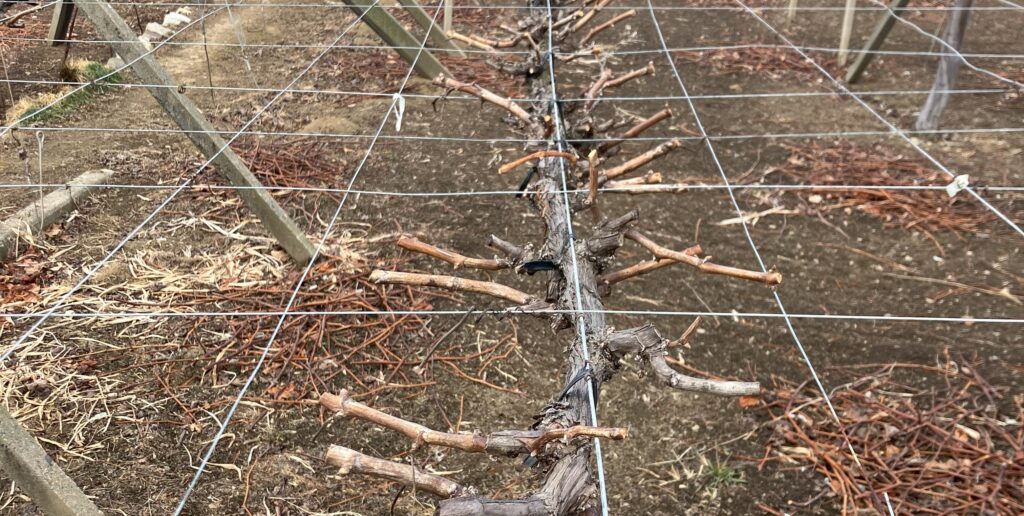
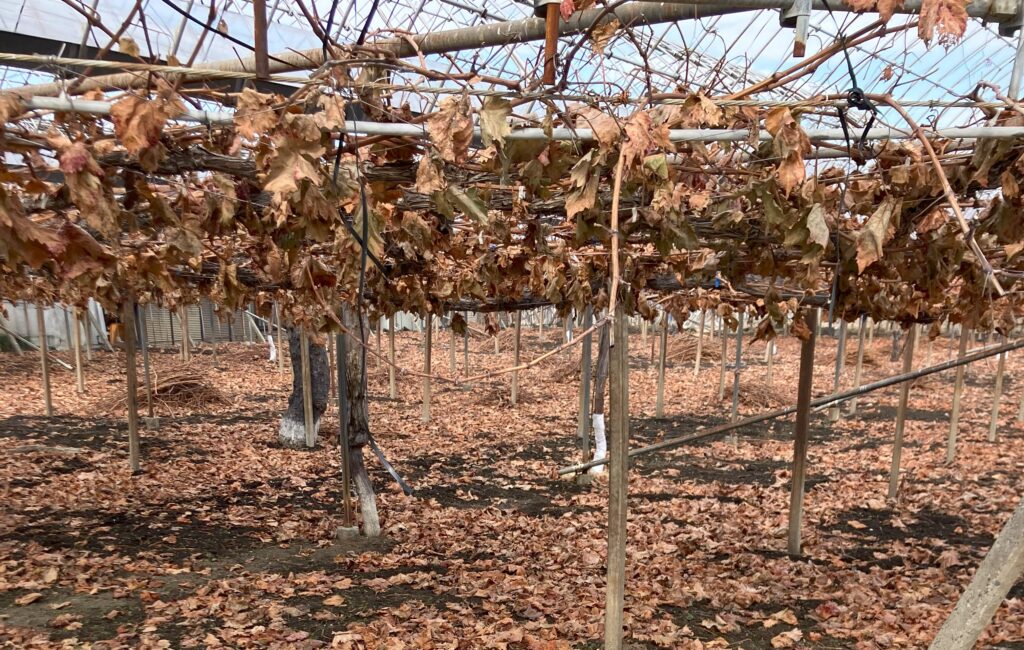
Vines are vigorous and the canes just keep extending, so there's winter pruning — deciding which canes to keep for next year — and summer pruning, deciding which bunches get the plant's energy.
With the vineyards' work done for now, I went to the wineries that pour tastings.
First stop: Iwasaki Jozo (Honjo Wine)
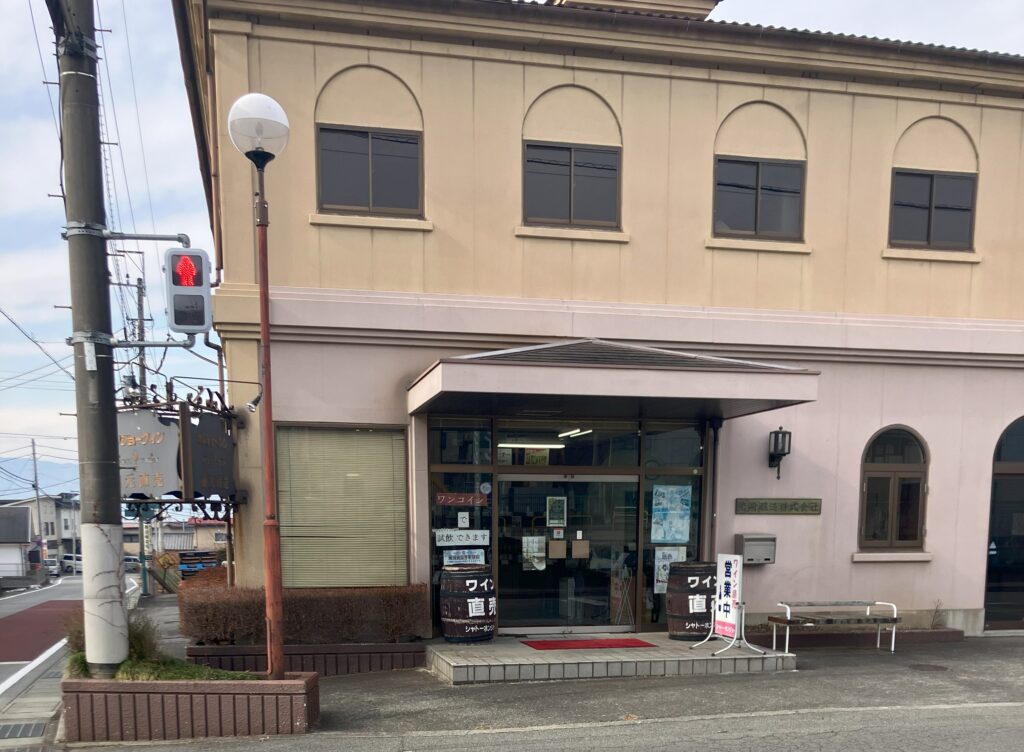
Founded in 1941 as a brewing cooperative, later incorporated, and still going. They run winery tours, they train people who want to start their own wineries, they win medals at the Japan Wine Competition — they do a lot.
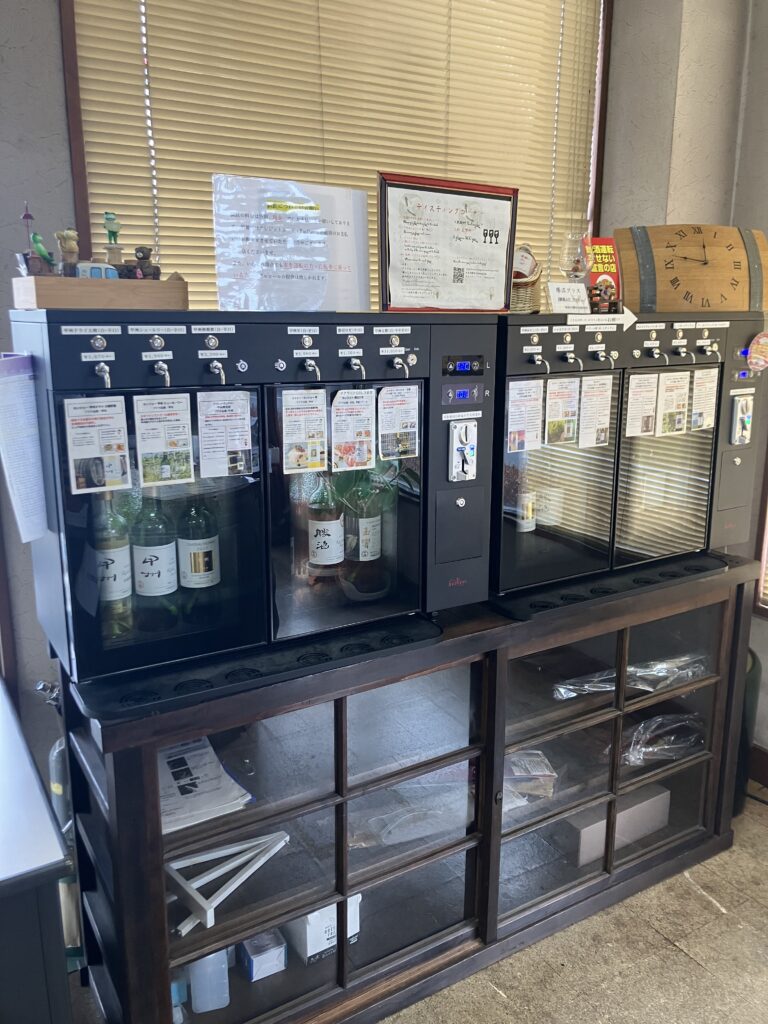
Inside there are bottles to take home and a machine offering around twelve wines for paid tasting at any time.
It was the quiet season, which probably helped, and a member of staff took the time to explain the wines properly. She was so welcoming that I'd say a beginner could walk in here without bracing themselves.
The first thing I tasted:
Honjo Koshu Dry, aged in large oak


This is Iwasaki Jozo's flagship.
As the name says, it's aged in large casks — 5,000 litres. The casks were built in 1944. There used to be seventeen of them; seven survive, and only one is still in service. Because the wine is topped up and blended as it goes, it carries no vintage.

Pale yellow in the glass. The rim is thin — nothing that says long ageing. The nose is young citrus. On the palate there's a chalky minerality, something like a Ramune soda; a flint note, a faint citrus peel, an agreeable sharpness running through the whole thing. A little kumquat sweetness on the finish.
Honjo Koshu Sur Lie 2023

Sur lie is a step in turning juice into wine where the liquid is left to rest for a while on the yeast that has finished working, picking up extra flavour from it. There's no fixed rule about how long the rest has to be before you can call it sur lie — every winery decides for itself. Some do about a week, some more than two, some far longer.
I don't know how long this particular Koshu spent on its lees.

The colour is almost the same as the cask-aged one. A bracing lemongrass sort of nose. The palate is sharper, the acidity more clearly drawn. There's a quiet savouriness underneath that feels very Japanese — probably from the lees. Lively lemon acidity on the finish too. The finish is short, but the body is there.
The staff member told me that "2023 had little rain in July while the fruit was sizing up, so the body is on the weaker side." I thought it showed pretty well regardless.
Chateau Honjo Matured Koshu "Tamayura" 2001


Past ten years or so, an ordinary grape gives out and the wine collapses.
"Tamayura" was made, I think, by people who believed Koshu could do more than that, and who wanted to see what long ageing would draw out of it. It isn't made every year.
The name comes from a poem by Kakinomoto no Hitomaro.
Hitomaro wrote verses in the mode later called kinuginu — a form that recurs throughout the Heian period, describing the morning a man and woman who have spent the night together must part, and how that feels. Many of the originating works are his.
"I did not look properly at my husband as he left at daybreak, and so I have spent this whole day restless, lonely, longing for him."
Tamayura itself is said to come from the faint sound of beautiful jewels — jade, lapis — touching against each other, and to have come to mean "the briefest moment," "faint," "barely there at all."
A deeply romantic name for a wine.

Deep yellow — the clean pale yellow of Koshu concentrated by time into something beautiful.
Inside a sweet volatile aroma, like warmed sake, there are notes of quince and kumquat, with a faint whiff of something like model glue mixed in.
The palate has a marmalade sweetness, jam-like, with a little nuttiness beside it.
After all those years there was still fruit left in it. That surprised me.
The woman serving knew her drinks broadly, not just wine, and added her own reading of each one. It made the whole tasting a pleasure.
Next: Lumiere
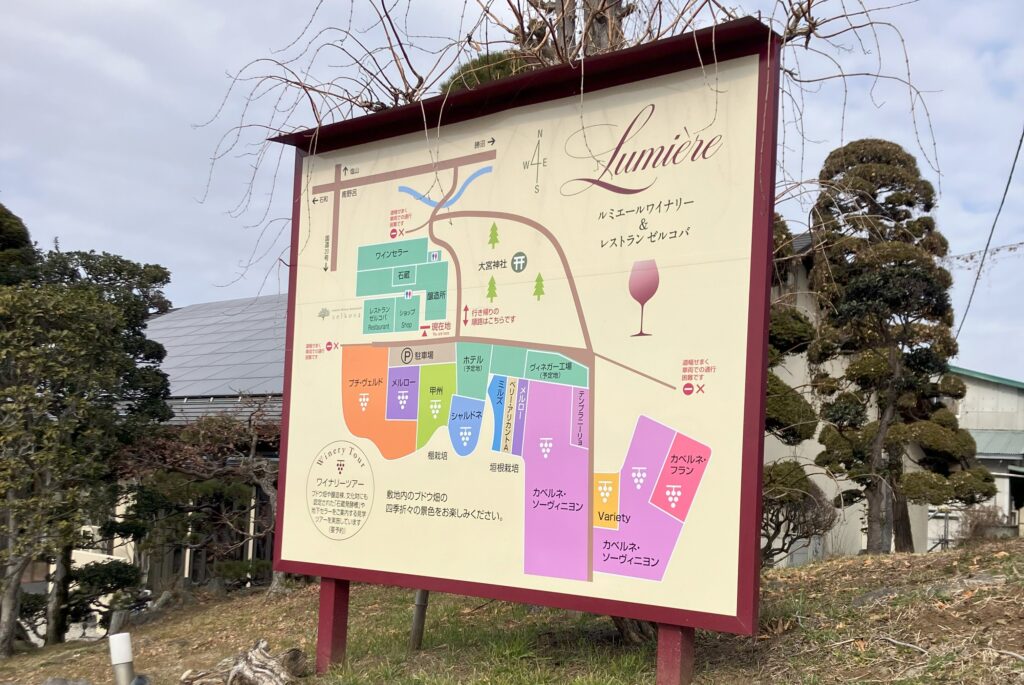
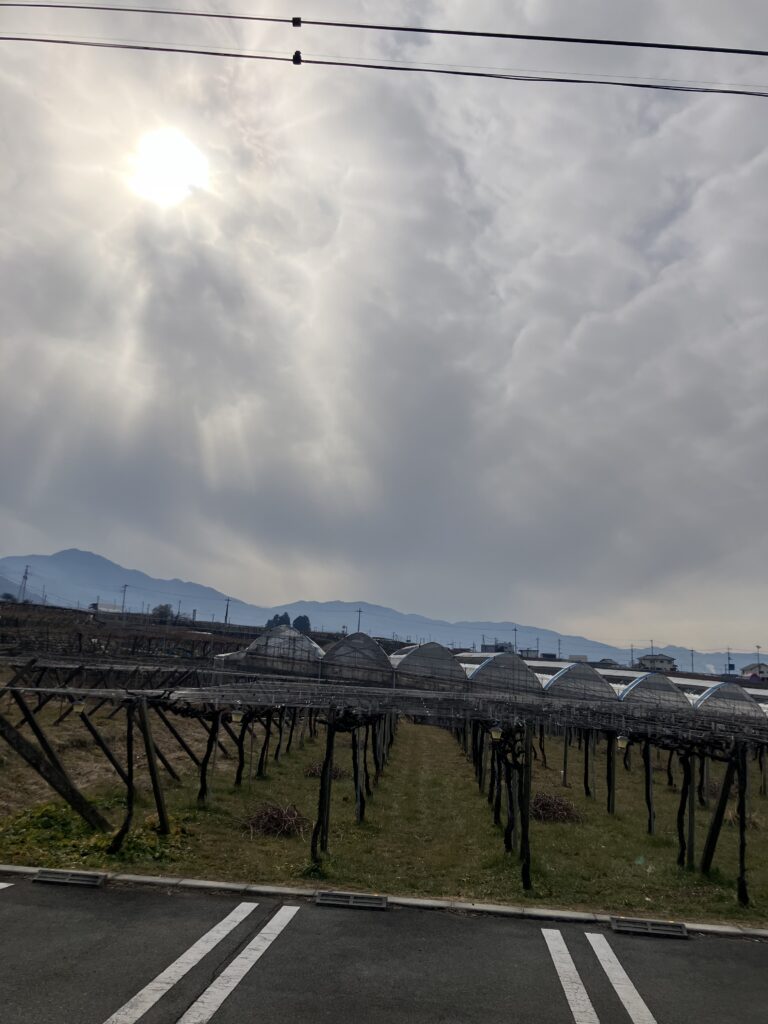
You can see a whole range of varieties planted in the vineyard beside the winery. I'd like to come back and see it in bud, then in leaf, then in fruit, then turning colour.
They're planning a hotel too. I'd stay in it.
The shop pours paid tastings. Twenty wines lined up, all at once.
You could spend a whole satisfying day at this one address.
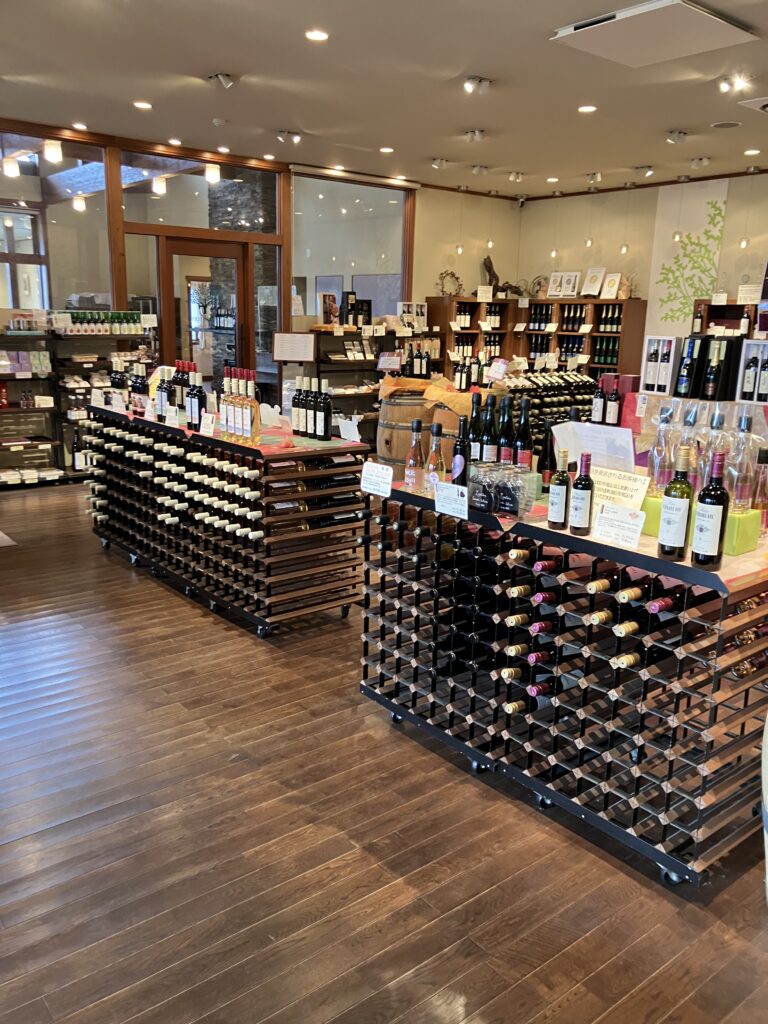
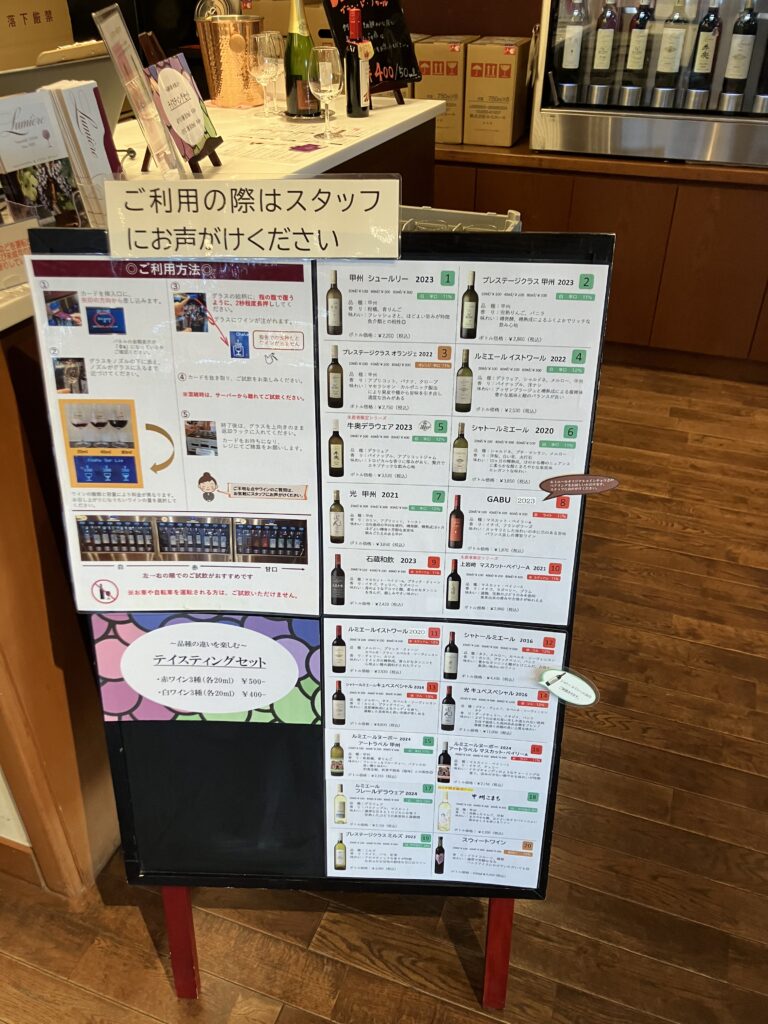
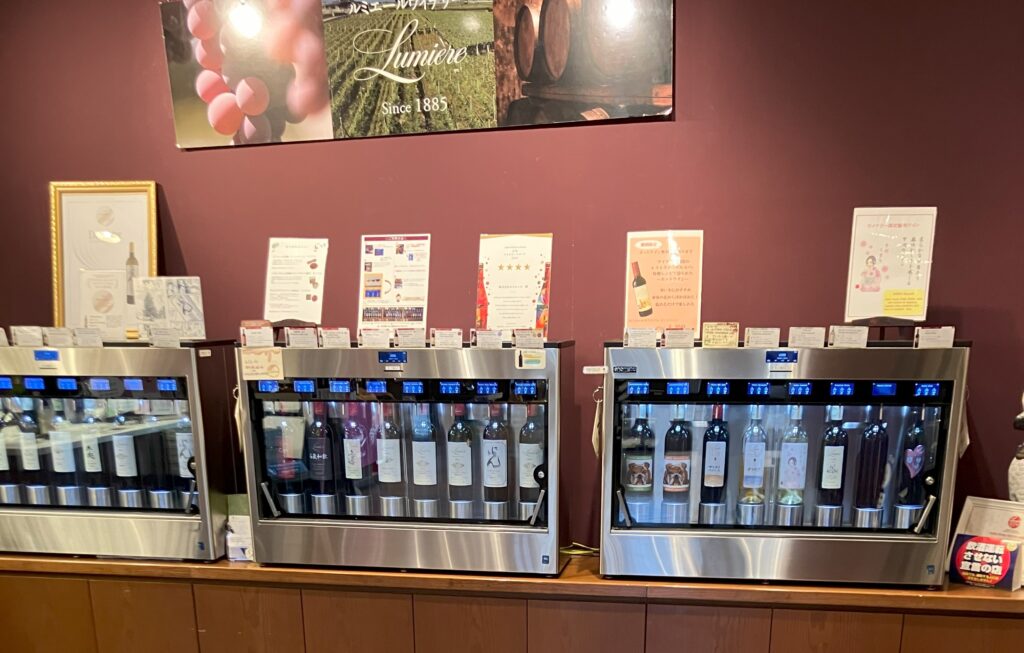
Plenty tempted me, but the first choice had to be Koshu. And a brand-new one at that.
Lumiere Nouveau 2024, Art Label, Koshu


Near-transparent, close to white. Muscat on the nose, with something like tea that's had a sugar cube dropped in it.
The palate is bright, energetic acidity and the faint sweetness of pure juice. No complexity, but the cut and lightness are pure Koshu and it's a clean pleasure to drink. I'd want it with sea bream sashimi, salt and a squeeze of lemon.

Koshu Sur Lie 2023


This one isn't racked off its lees until spring.
Clear with a yellow cast. A tart citrus nose that reminded me somehow of French Sémillon.
There's acidity, but it's gentler than the Honjo. The minerality isn't strong. The whole thing is softer and more gathered. No oak that I could detect, so the faint almond note is presumably from the lees.

Hikari Koshu 2021

The 2018 vintage scored 97 points and took a Platinum medal at the Decanter World Wine Awards 2021. A Japanese Koshu, chosen among the wines of the world — that is a wonderful thing. One other Japanese white took Platinum that year: Shirayuri Jozo's L'Orient Katsunuma Koshu 2019. Outside Japan the list ran to Champagne, Burgundy, Alto Adige, port from Portugal and other serious white wine addresses — 79 wines in total.
Hikari Koshu also appears in the manga Kami no Shizuku (Drops of God), which tells you how central it is to any conversation about Koshu.


The lighting was orange so I couldn't read the colour precisely, but it looked yellow with a touch of gold.
The nose is smoky. Nuts, a little cacao, apricot and apple. You can sense the complexity. In the mouth: fresh green apple, the sweet-tartness of red apple, young pear, a faint nuttiness — elegant and fresh overall, with the clean Koshu acidity cutting through, all of it neatly resolved.

By this point I was fairly drunk.
One red to finish.
Chateau Lumiere Cuvée Spéciale (red) 2014


I ordered it half as a palate-cleanser, and —
it's good. Really good.
A little orange at the rim. A clean purple.
Red and black berries on the nose, with a sweet jammy note mixed in, and liquorice, and the smell of a fern forest. The palate has firm acidity down the middle, blackcurrant fruit, bitter cacao as an accent. There's weight to it. I'd put it up against elegant French wine without embarrassment.

I asked the staff how 2023 had gone for Koshu: "2023 had good weather. No typhoons came, so we delayed picking. There's volume in it, but the acidity is on the low side for the year."
And in Katsunuma you can't skip this one
Chateau Mercian Katsunuma Winery
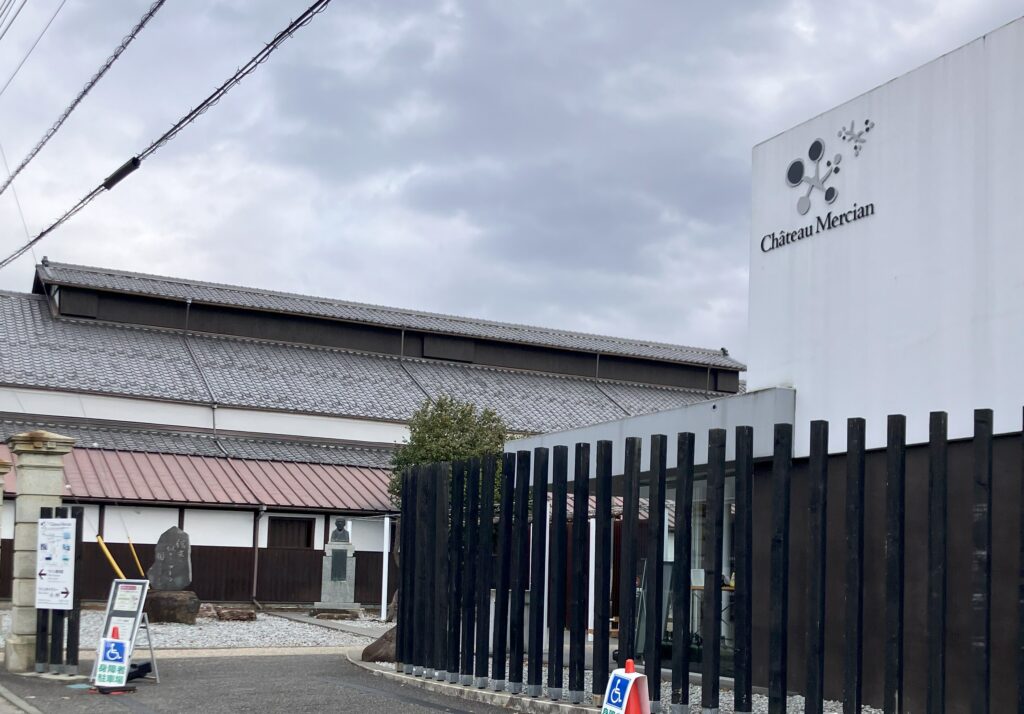
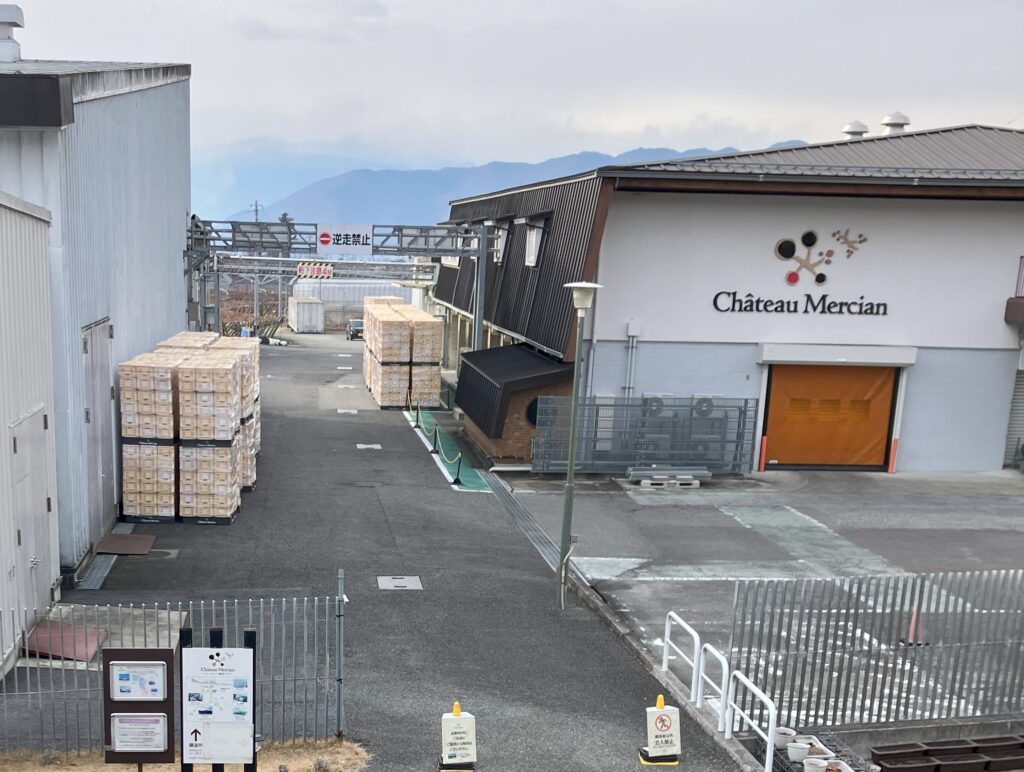
This is Chateau Mercian's home winery, with a wine gallery — tasting counter and shop — plus a wine museum, all open without a reservation.
Just inside the gallery there are displays showing the soils and characteristics behind their principal wines, which are genuinely useful. The soil samples are the best part for me. "Yellow sandy soil," "clay" — the words don't land until you're looking at the actual dirt, and then you can start imagining why a soil like that gives a wine like this.
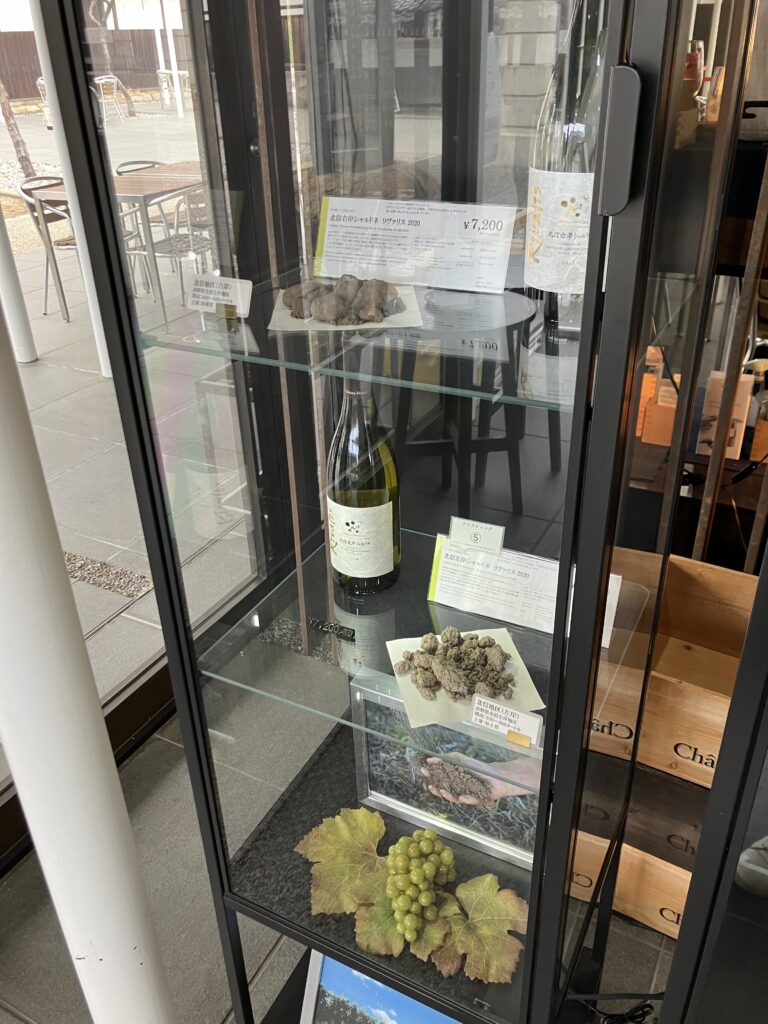
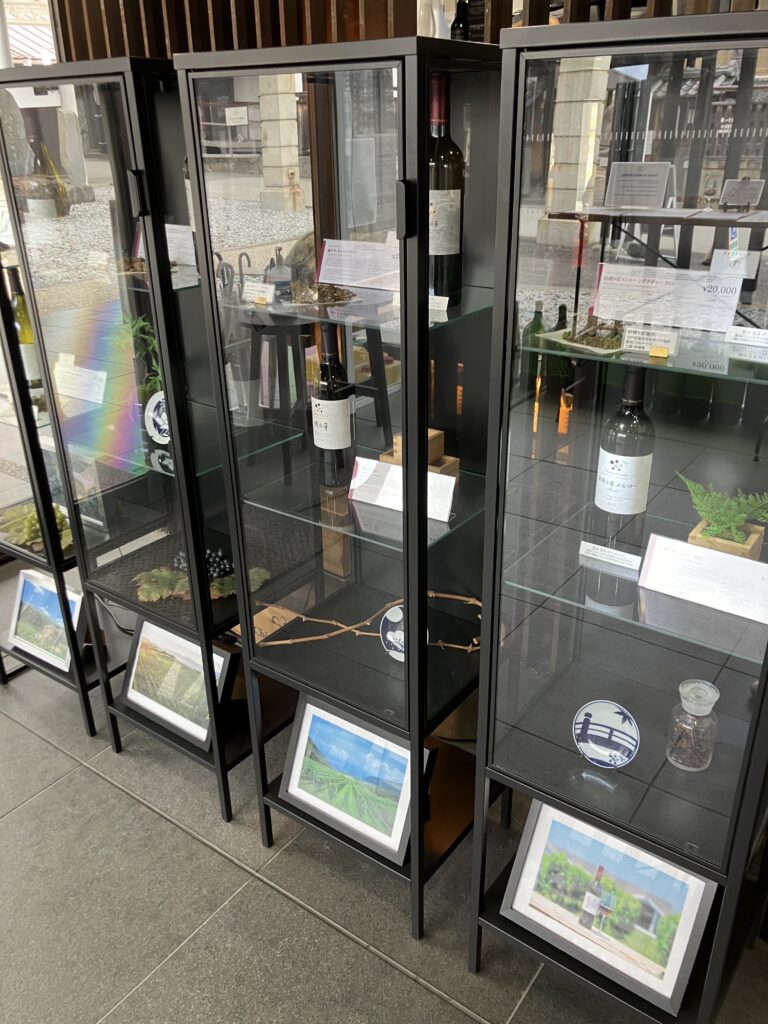
I ordered a tasting of two whites from the Icon range: Iwade Koshu Ortum 2022, and Chateau Mercian Hokushin Sagan Chardonnay Rivalis 2020.
I wanted to know how Mercian's top tier handles Koshu, and how they make an international variety like Chardonnay come out Japanese.
Chateau Mercian's portfolio runs in three layers: Icon, Terroir, and Quality. Icon stands alongside the best wines in the world; Terroir expresses the character of a place; Quality aims at perfect balance in a Japanese wine.

Iwade Koshu Ortum 2022

Pale yellow, nearly clear. Limestone on the nose, young white peach, fresh apple. The attack is direct and firmly acidic — and it's a pleasure. The acidity gives it cut while the other flavours still expand around it.
Of every Koshu I drank that day, this one had the most potential in it. Powerful.
I'd carried around an image of Koshu as acidic, clean and a little thin. This wine dismantled it. You can build something this strong and still keep everything that makes Koshu itself.
Someone at Honjo had said 2022 was a good year. That tracks.
There's a Ramune-soda tartness at the back of the mouth that won't be for everyone. I loved it.
Chateau Mercian Hokushin Sagan Chardonnay Rivalis 2020

Yellow with a hint of green at the rim. Mango on the nose, and the sweetness of nectar from white flowers. The palate has an unusual clarity to it, something like aloe. Coming straight after the Ortum, it didn't show the same power to me. Possibly the cold — I tried warming the glass in my hands.

I'll come back to the Hokushin Sagan Chardonnay another time.
Mercian's take on the vintages: "There isn't much between 2022 and 2023 for Koshu. Some of our wines won awards in 2022 and not 2023, and for others it's the other way round. 2024 had little rain, a big crop, and the quality is good." I'm looking forward to the 2024 Koshus.
This visit was only a walk-in tasting and a quick look around the outside. Next time I want to take the museum slowly, or join the winemakers' tour.
Three wineries, three readings of the same vintages — and they didn't agree. Katsunuma has its own microclimates, so each winery experiences the year differently, adjusts its winemaking accordingly, and ends up with a different wine. Pinot Noir in Burgundy and Riesling in Germany are recognised worldwide precisely because they change from one plot to the next. I came away understanding that Koshu on this ground has that same future ahead of it.
An evening in Kofu
I moved on to Kofu Station, where my room was, and took dinner slowly. Arriving somewhere new, the first thing I want is Japanese food, or sushi. So:
Sushi to Sake, Sorekara Kurumaebi
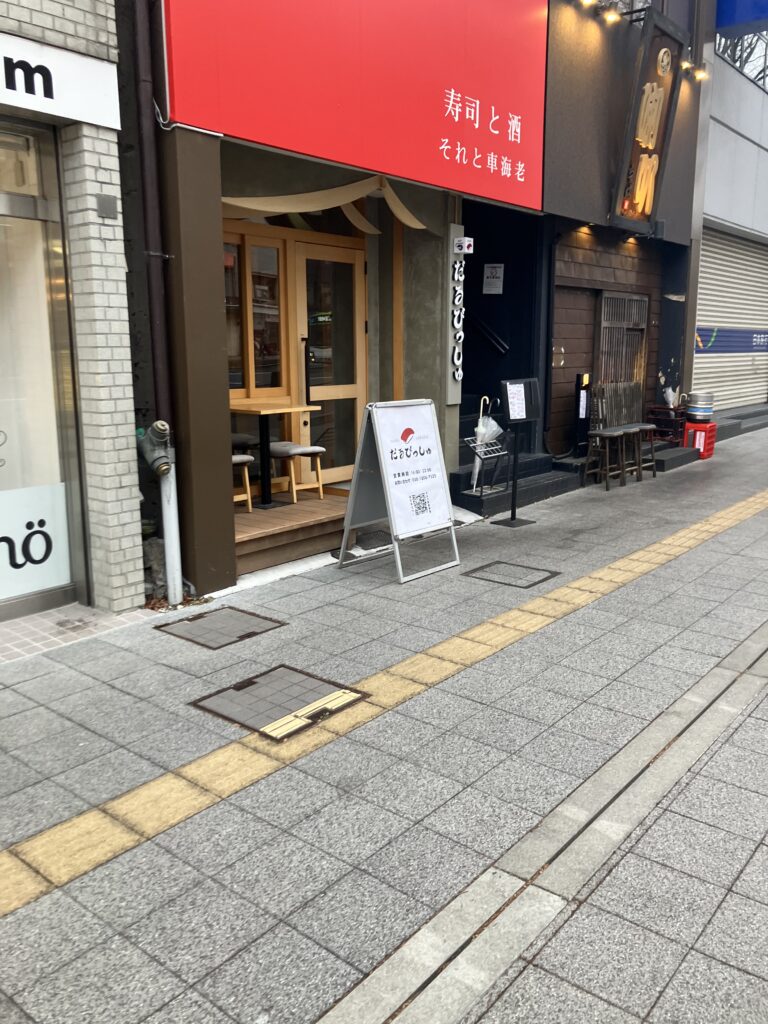
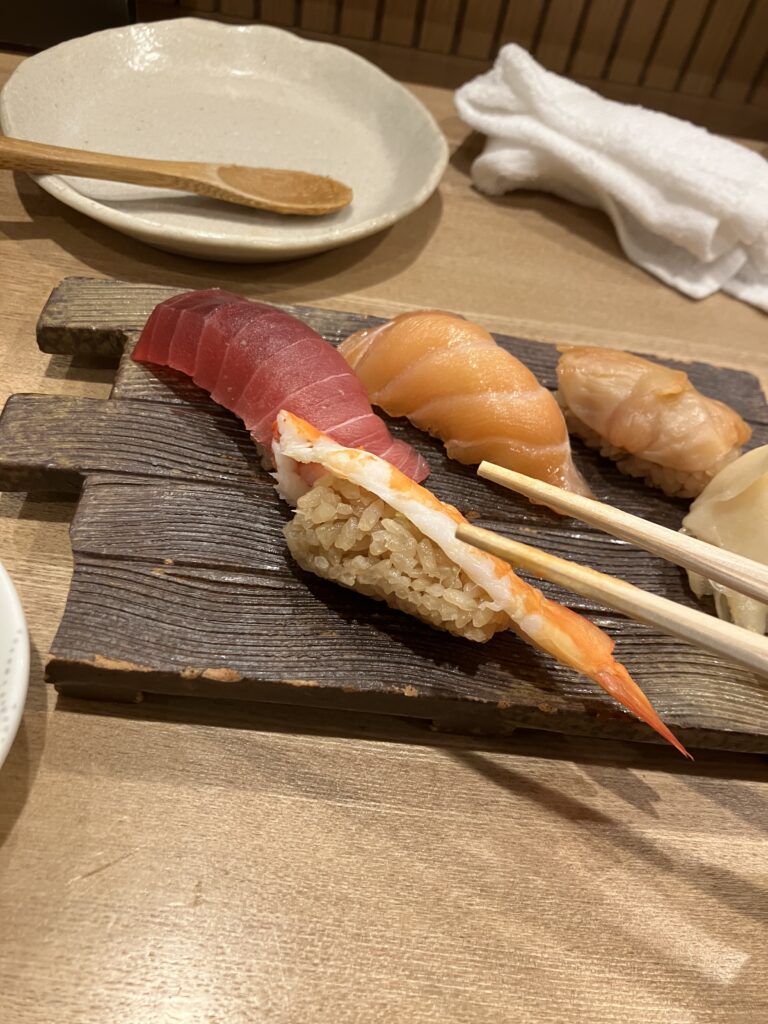
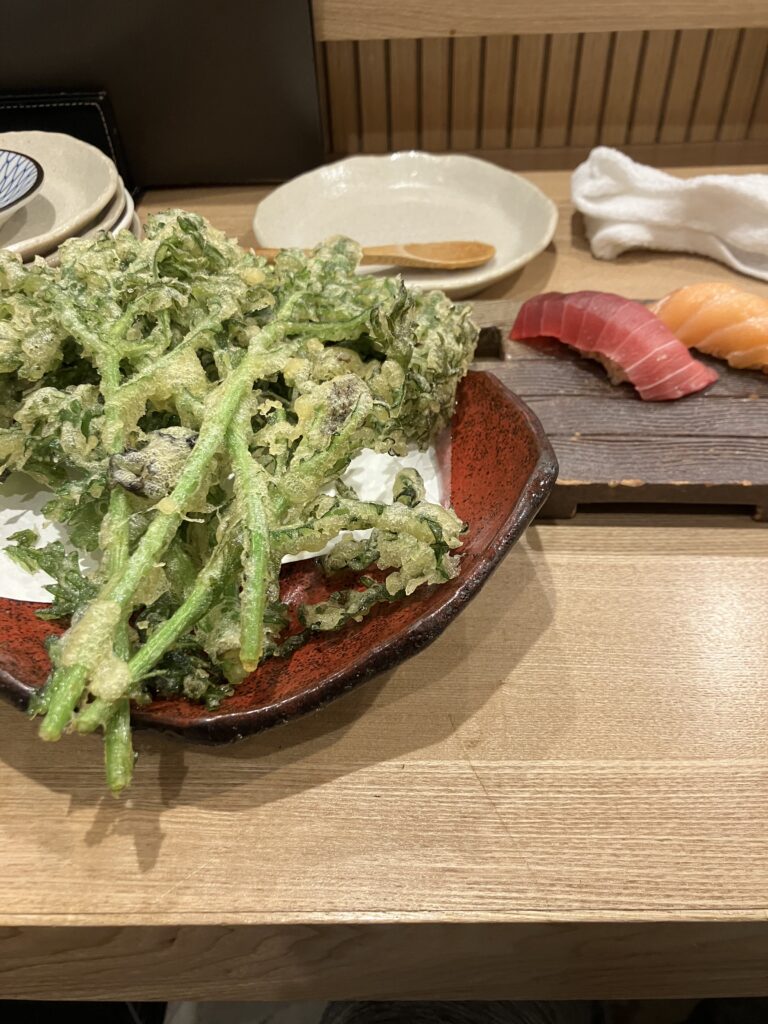
Full and happy. Sadly there was no Japanese wine by the glass, so it was beer and sake.
And I still wasn't finished, because there was one more place I'd been curious about.
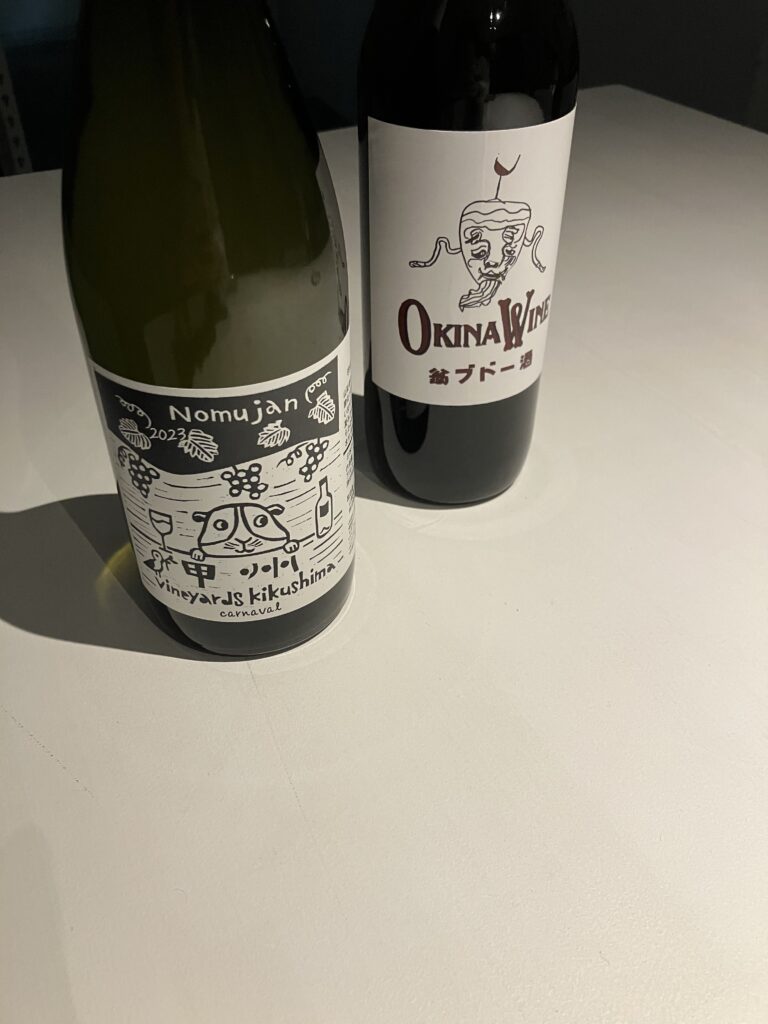
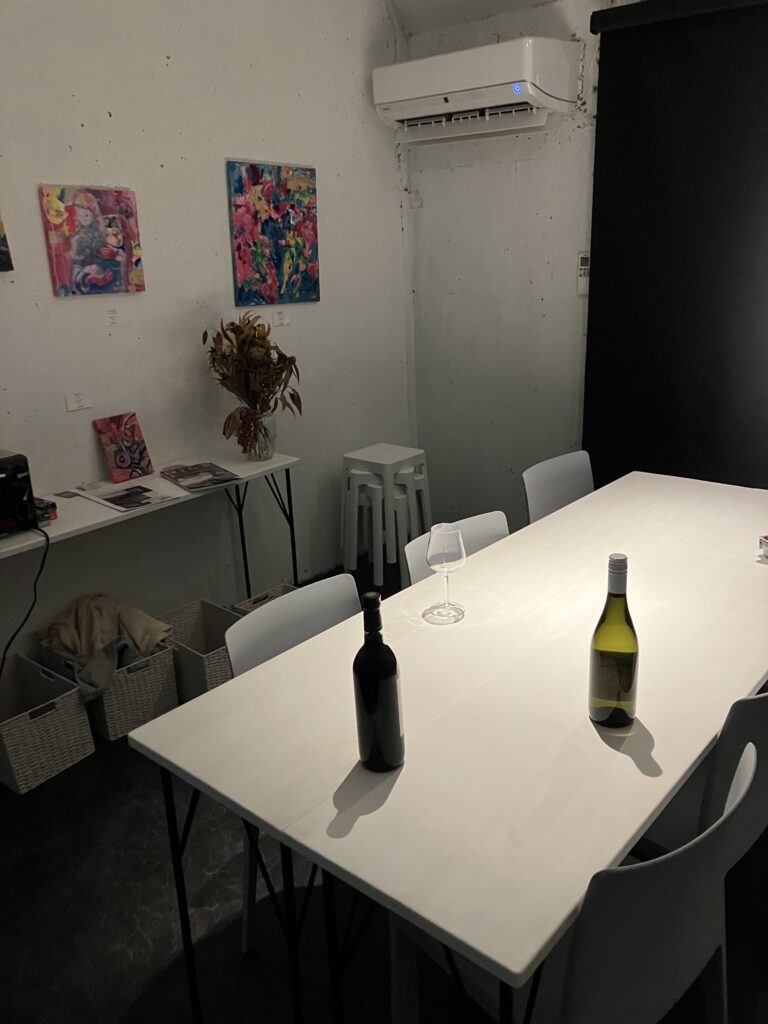
An unstaffed wine bar. It's called:
Mujin
I'd half hoped there would be another solo drinker in there. There wasn't.
I had the whole room to myself, and spent it going back over the day, feeling faintly wistful about it.
This is the English edition of an article first written in Japanese. 日本語版はこちら.